

The Bus of Hope led the way when RWF was the Organization Grand Pride Marshal at San Francisco's LGBTQ+ Pride Parade.
The Rainbow Bus
Welcome to the RWF Rainbow Bus! Since 2007, the RWF Rainbow Bus (aka The Bus of Hope) has been used to deliver humanitarian aid — food, medications, medical and emergency shelter supplies to communities in need. Our trips have included delivering aid to Mexican border towns and to wildfire survivors in California. We also use the bus as an outreach tool at community events and during LGBTQ+ Pride.

The Rainbow Bus at the Castro Street Fair — raising funds to help earthquake survivors in Mexico and hurricane survivors in Puerto Rico (2017).
Join the Autobus de la Esperanze, the Bus of Hope, on a California to Mexico LGBTQ+ humanitarian aid journey
In the summer of 2026, Rainbow World Fund (RWF) will return to Tijuana, Mexico, to deliver medical and school supplies, as well as cash grants to an orphanage, an HIV/AIDS medical clinic, and an educational nonprofit. The supplies will be transported to Mexico on RWF’s rainbow-colored bus – El Autobús de la Esperanza
(The Bus of Hope). As the bus travels south through California, RWF collects supplies and cash donations from churches, colleges, community groups, and individuals. While gathering supplies, RWF will conduct educational outreach on the need for humanitarian aid across the developing world. The partnerships established during this trip will enable RWF to repeat this journey and continue supporting aid projects in Mexico.

At a Black Lives Matter action in San Francisco (2020)

The Rainbow Bus delivering humanitarian aid after wildfires in northern California (2017).

San Francisco Pride Day (2020)
Our goal for El Autobús de la Esperanza is to collect and deliver between 5,000 and 10,000 pounds of medicine, school supplies, and Christmas gifts for the children.
How the Project Works
RWF challenges the LGBTQ+ and friends community throughout California to collect
supplies and donations. We will make stops in Sacramento, San Francisco, San Jose, Santa Cruz, Los Angeles, Long Beach, San Diego, and neighboring communities. During the weeklong journey to Tijuana, RWF will provide “teach-ins” on concerns such as global poverty, the beneficiary organizations directly supported by this project, and RWF’s global projects. A publicity campaign precedes each community visit, including local newspaper articles and radio/television coverage.
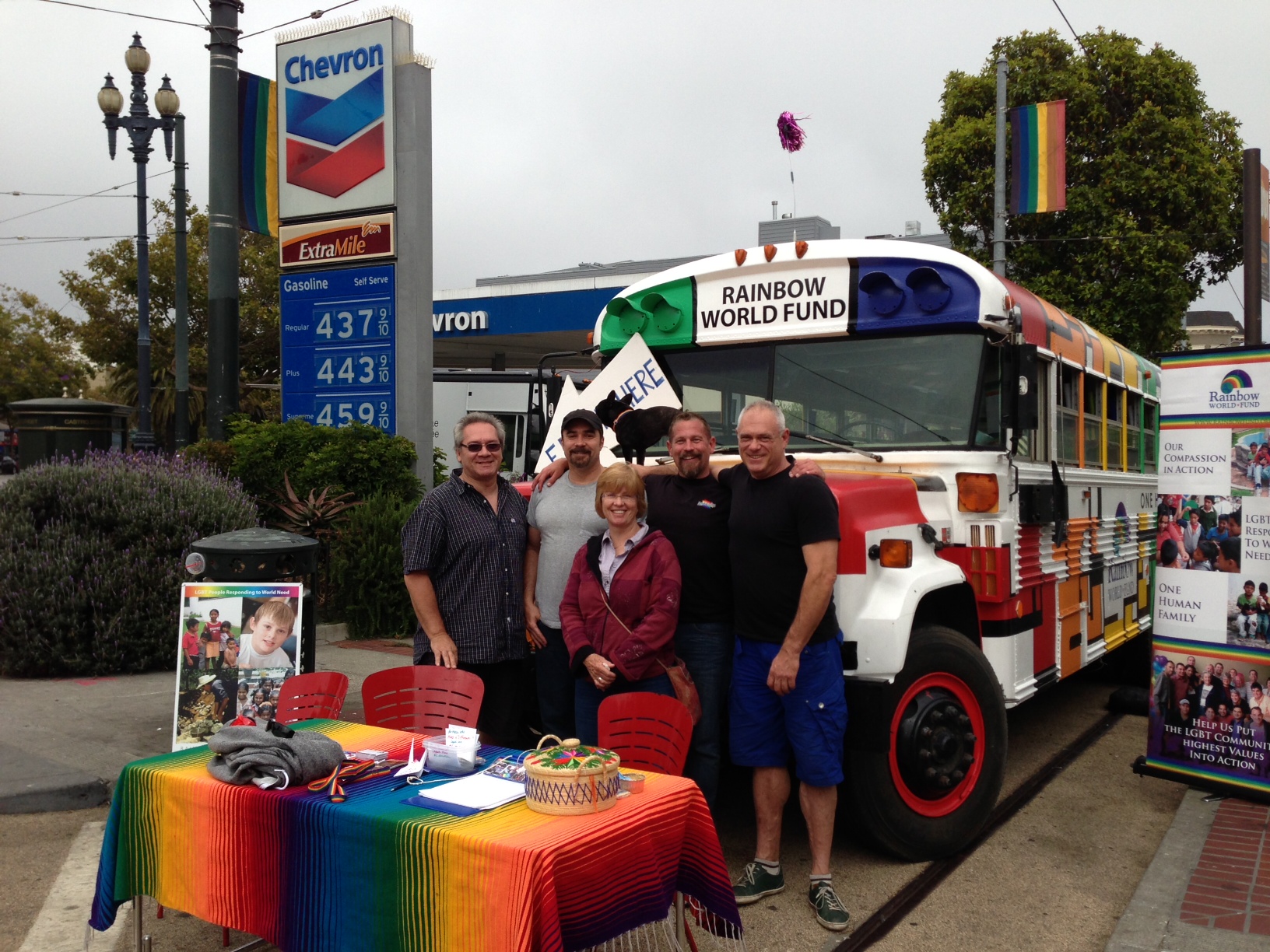
RWF volunteers doing outreach in the Castro neighborhood in San Francisco (2015)
How You Can Help
RWF is seeking assistance from individuals and LGBTQ+ social justice organizations to solicit, collect, and organize donations of medical and school supplies. We seek hosts for our traveling bus volunteers and secure overnight parking for the bus. We need help in arranging venues where we can speak and publicize the project. Additionally, we seek monetary donations to cover expenses associated with the project and to provide grants to the Mexican humanitarian service agencies that we are supporting. Join us for the one-day project tour in Tijuana (we have a limited number of bus seats).
Why This Project Is Important
Rainbow World Fund has three primary goals: to provide humanitarian aid to communities in need around the world; to create awareness within the LGBTQ+ community of the need for these relief efforts; and to change how the world sees LGBTQ+ people by putting our highest values and beliefs into action by demonstrating our compassion and caring for the world.

RWF Founder Jeff Cotter visiting orphans in Tijuana, Mexico on a Bus of Hope trip (2008).
El Autobús de la Esperanza affects social change at home and abroad by:
Education - We share information on the effects of globalization and free trade agreements on medical care, the lack of educational opportunities for people experiencing poverty and their impact, and the effects of substandard working conditions in the developing world.
Networking - We exchange ideas about how to affect social change. For example, ways in which those in universities, churches, and community groups can organize and exercise their consumer power to develop and monitor codes of conduct, and to compel respect for workers’ rights in maquilas (Mexican factories).
Strengthening solidarity - We educate ourselves, our families, and friendsabout how we, as empowered individuals in a united community, can worktogether to heal our world through fostering understanding, community buildingand strengthening commitment among individuals and organizations in California and Mexico dedicated to eradicating global poverty.
Building community - We develop an ongoing network of individual and organizational volunteers to sustain aid projects in Mexico.
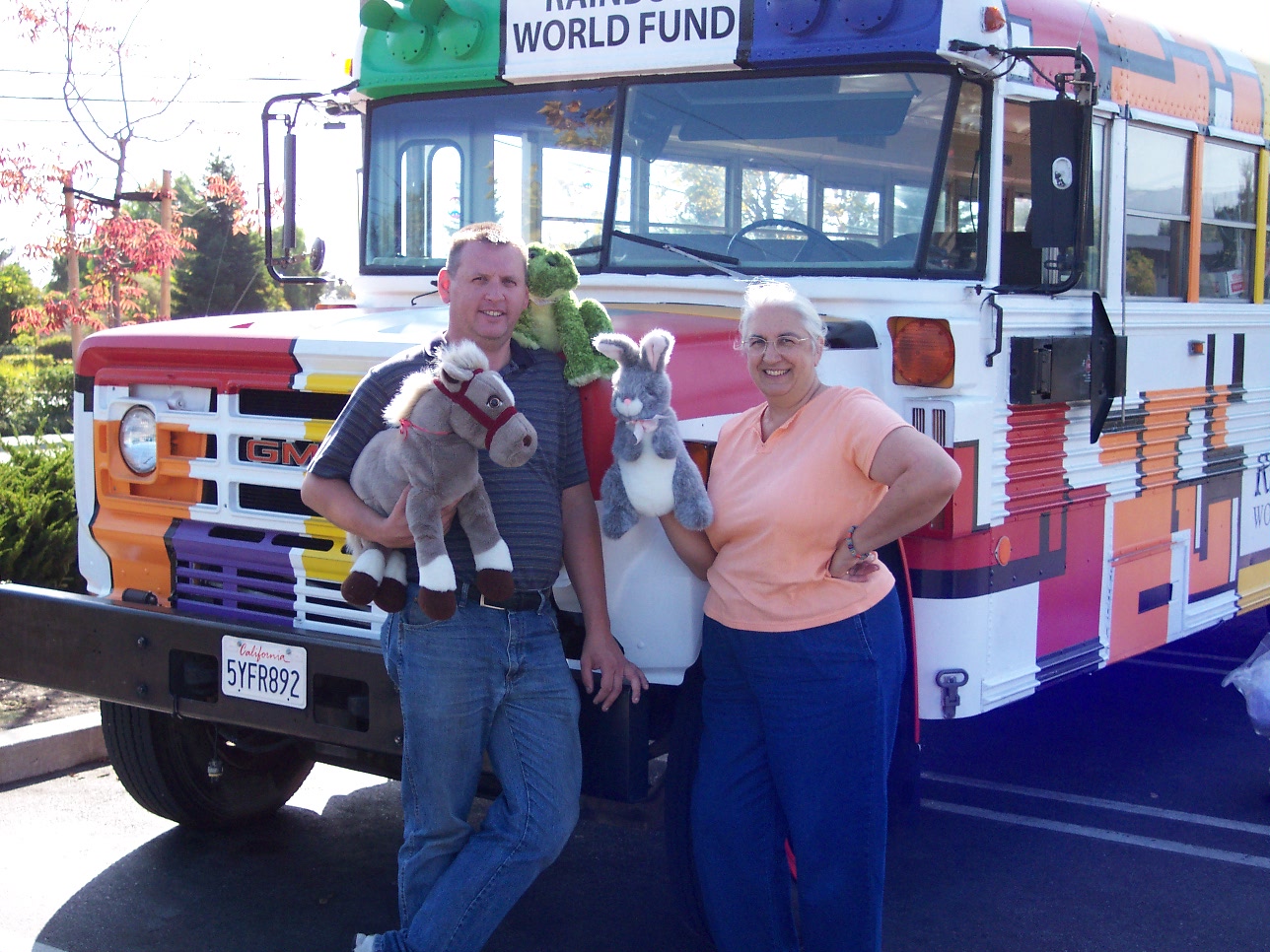
RWF bus driver Ed Johnson with Ellen Hensen of Animal Beacons of Light - RWF has distributed thousands of stuffed animals to children during our humanitarian aid trips. These huggable friends were headed to children in Tijuana, Mexico (2008)
Raising awareness of LGBTQ contribution - We are changing how the world sees LGBTQ+ people. Unfortunately, much of the world still sees LGBTQ+ people in stereotyped ways, often believing that they only care about sex, drugs, and materialism. Many of us care about a lot more than that. This project puts our highest beliefs and values into action and raises awareness of the LGBTQ+ community’s long history of leadership and positive impact. Through media coverage, we will highlight the specific work and contributions of the organizations with whom we partner on the Bus of Hope project.
Intended Recipients- Hogar Infantil “La Gloria” (Children’s Home “La Gloria”) is a long-established orphanage located in San Antonio de los Buenos, 13 miles from the US/Mexico border. The mission of Hogar Infantil “La Gloria” is to care for the abandoned and abused children of Tijuana. Currently, the orphanage is home to 54 children aged seven months through 12 years. The children are cared for by paid employees who live in the surrounding area. The children’s lengths of stay differ depending on their unique abilities, but usually last through elementary school graduation. Hogar Infantil “La Gloria” receives no monetary assistance from the Mexican government and relies solely on donations.
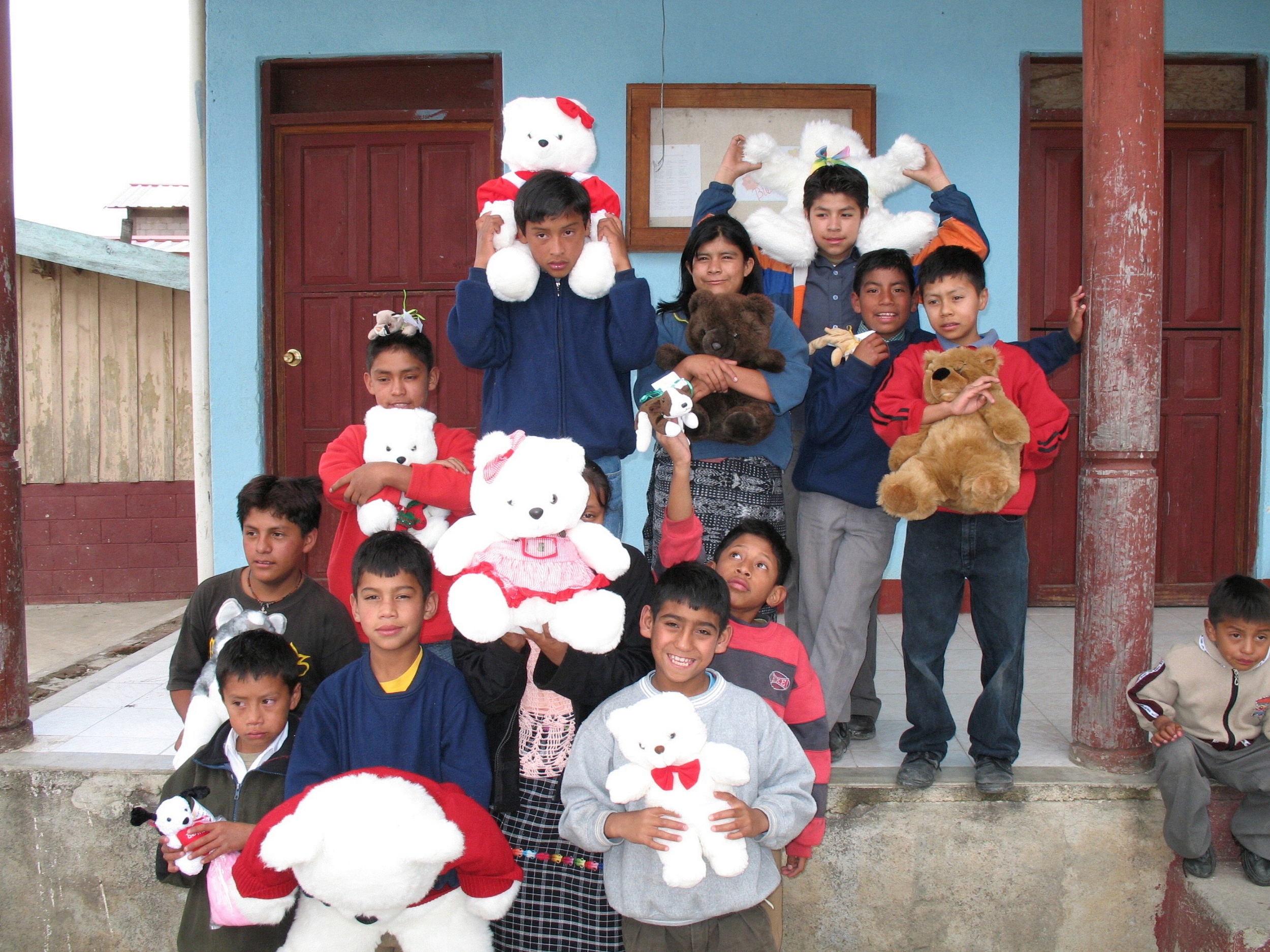
So many children around the world have no toys or stuff animals - these children are holding stuffed animals that RWF delivered to their orphanage (2007)
A Su Futuro (On to Your Future) is a scholarship program founded in 1984 that funds education through the university level for students from Hogar Infantil and the surrounding community. In Mexico, education beyond the sixth grade is not readily available to most students, and children at the orphanage often do not continue their studies after elementary school. A Su Futuro’s mission is to provide disadvantaged students with access to education and support for academic success. Each year, more than 90 percent of ASF participants complete the school year, and more than 80 percent return for another year of study. Each year, more and more students extend their studies. In 2001, the first participant completed college as an accountant. Another student, Maricela, has since begun her master’s studies. ASF celebrated its second college graduate in 2006, when Jesus earned a degree in medicine.
Clinica Acosida Tijuana, A.C. (Alliance Against AIDS Clinic of Tijuana, Inc.) was founded in 1983. The well-respected Alliance provides medications, medical services, HIV testing, counseling, and peer education focused on prevention to the local community. The primary purpose of the Acosida clinic is to provide free, quality outpatient HIV treatment and medications for poor and low-income HIV patients of the Tijuana, Baja California region who do not qualify for or cannot afford any other health care option. Clinica Acosida serves an average of 50 patients per year for continuing care, in addition to approximately 200 patients who come to the clinic for HIV counseling, blood testing, and other services.
Suggested Supplies
In the past several years, RWF has delivered approximately $3 million in donated medicines, medical equipment, and school supplies to Central America, the Caribbean, India, South America, and Zimbabwe. We are also starting to collect supplies for Mexico. These supplies go to hospitals, orphanages, schools, and medical clinics. Please use this link to contact us for information about donating supplies. Also, please remember, monetary donations are highly welcome and fully tax-deductible.
Medical Equipment
Stethoscopes – infant, child, adult
Blood pressure cuffs – all sizes
Digital thermometers (centigrade) for infant and adult
Basal thermometers (for birth control)
Ophthalmoscopes, otoscopes, hearing testing tools, eye charts
Stainless steel instruments, especially scalpels and blades, scissors and hemostats
Fetal Doppler, any type, and Doppler gel
Baby scales (fish and tabletop), adult scales
O2 equipment – regulators, tubing, masks, ambu-bags
Ultrasound machines – portable and with battery
Teaching Materials (in Spanish)
Medical and nursing textbooks, maternity/growth charts, etc.
Models – babies/pelvises/skeletons, etc.
The Physician’s Desk Reference
School and Educational Supplies
Pens, pencils, sharpeners, crayons, paints, rulers
Calculators
Art supplies – tubes of paint, brushes, canvas
Educational toys
Books in Spanish
Educational computer programs: math, typing, English as a second language
Sports equipment
Musical instruments
Computers and laptops

Raising fund for earthquake survivors in Peru (2007)